
Social Etiquette
Minding the Minefields and Mapping the Manners
Welcome to your guide to keeping your foot out of your mouth.
In any new culture, one of the quickest ways to accidentally derail a promising conversation is by stumbling into a taboo topic or using forbidden language. While you’re here to learn about North American culture, you’ll quickly realize that not everything is fair game for small talk. What’s funny, insightful, or even mandatory to discuss in your home country—like salary, politics, or physical appearance—is often considered strictly “off the table” here.
This is your map to navigating this lingual minefield and your social compass. We’ll reveal which subjects to bypass entirely and how to master the unspoken etiquette of North American society. You’ll learn the key Dos and Don’ts—from punctuality and tipping to informality and respecting personal space—all to save you from any awkward social faux pas.
Don’t Mention It
Dark humour often explores taboo subject matter, but unless you’re a brilliant satirist, you might want to steer clear of them in your small talk rotation. These subjects are widely considered “off the table”, and should definitely be avoided when meeting people:
| Category: | Why It’s Avoided: |
| Politics | Can quickly lead to conflict or offence. |
| Religion | Highly personal and sensitive beliefs. |
| Sex/Sexual Orientation | Too intimate and private for new acquaintances. |
| Income/Salary | Financial details are considered private (North Americans do not discuss how much they make). |
| Physical Appearance | Commenting on someone’s body or looks (unless you know them well) is often seen as impolite. |
| Racist/Sexist Remarks | ALWAYS inappropriate and unacceptable, even as a joke. |
Once you’re friends with someone, you can and likely will discuss them at some point, but skip them in the beginning.
Be aware, though, that some professors like to intentionally bring up taboo subjects in class to facilitate engaging discussion, or to analyze the source of the taboo label.
Sexist, racist, or homophobic comments and jokes are always a no-no.
“Bad” language, on the other hand, is a subjective term. What’s bad for one may not be bad for another. Profanity–or swear words–are not appropriate in many situations, but that list is changing, and even the words considered to be “bad” are not the same as a decade ago. Believe it or not, but the word ‘pregnant’ was once on the taboo list and rarely said in polite company.
Taboo Language
Taboo language is a fascinating topic, and it can be divided into several sub-sections of severity.
For example, the f-word, the n-word, and the c-word are probably three of the worst in the English language, but the f-word is actually surging in popularity in recent years.
The word ‘shit’, once on the forbidden list, is now commonplace, as is ‘bitch’. But be aware that a man using the word ‘bitch’ and a woman using it carry very different connotations.
Vocabulary that indicates gender–like chairman or waitress–are being replaced by gender neutral alternatives, and racial or ethnic slurs are frequently in the most offensive category (don’t ever use them, even in jest).
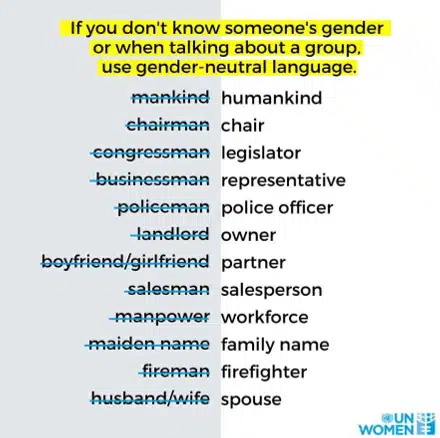
It’s a lingual minefield. Be mindful of the situation and company when thinking about or using taboo language.
The Individualist Mindset: Why We Don’t Discuss That
The most confusing aspect of North American taboos often lies in the cultural values of individualism and egalitarianism. Knowing this helps you predict which topics will cause friction.
| Taboo Topic: | Underlying Cultural Value: | Rationale for Avoidance: |
| Income/Salary | Individualism | Money is tied to individual success and is considered deeply private. Asking about it is seen as intrusive and disrespectful of that personal boundary. |
| Politics/Religion | Individualism | These are seen as core, private expressions of a person’s individual identity and conscience. You don’t challenge a person’s core identity in small talk. |
| Physical Attributes | Egalitarianism | Commenting on someone’s body or appearance (positive or negative) establishes a power dynamic where you assume the right to judge them. This violates the unspoken rule to treat all people as equals. |
What topics or words are considered taboo in China? Is anything considered okay that used to be off limits, or vice versa?
The Apology Protocol: Recovering from a Mistake
Mistakes happen. It’s not the mistake itself that matters most, but how quickly and sincerely you recover. Since Canadians are noted for frequent apologies, a quick, sincere apology is the socially expected path back to smooth conversation.
The Language of Recovery and Profanity
- The Apology Formula: If you accidentally ask a taboo question or make an innocent gaffe, use a sincere, brief apology. Acknowledge the error, attribute it to a cultural difference, and move on immediately.Try this: “Oh, I am so sorry. That was an inappropriate question, and I’m still learning the social rules here.“
- Default to Zero Profanity: The section on “bad language” is complex, so your safest, smartest strategy is to default to zero profanity in all academic, professional, or new social settings. Profanity is acceptable only after you have become a trusted member of a social group and know their explicit boundaries. When in doubt, leave it out.
The Dos and Don’ts of “Polite” Society
This section could be an entire program of study all by itself. You can’t learn everything there is to know about social etiquette in a few paragraphs. The only way to do it is through practice and experience. Get out there and socialize. Trial by fire.
“Nothing is less important than which fork you use. Etiquette is the science of living. It embraces everything. It is ethics. It is honour.”
emily post
People are people, no matter where they come from, and while differences do exist in how we interact with each other, there are similarities, too. It’s not an entirely new game.
And because of the international nature of the world we call home, most people are very understanding of mistakes and the occasional faux pas that someone might make when they’re in a new place.
Thankfully, you don’t need to learn about Canadian etiquette and American etiquette. They’re both essentially the same, and they’re both likely similar to Chinese etiquette in many ways.
North Americans tend to be egalitarian–believing in the equality of all people regardless of gender, race, background, or sexual orientation–and individualist–placing more worth on the individual than the group. Treat all people as equal, and respect their rights and personal space.
| Action: | Why It Matters: |
| Be Punctual | Time is money. Being late is considered rude and discourteous. If you’ll be late, even by a few minutes, always call or message ahead. |
| Use Informality | First names are the standard, even with teachers. North Americans are generally individualist and egalitarian. |
| Mind Your Manners | Use “Please” and “Thank you.” Canadians will often apologize frequently (even when bumped into). |
| Shake Hands | A handshake is the standard greeting for both men and women when meeting someone new. |
| Bring a Small Gift | If invited to someone’s home, a gift (wine, dessert, flowers) is appreciated, but not strictly expected. |
Punctuality
Many cultures have a laid back attitude to time, but North Americans take it very seriously. Time is money. My time is as important, if not more so, than yours (it ties back to the individualist attitude). Be on time. Being late and keeping people waiting is considered very rude and discourteous. If you’re going to be late, even by just a few minutes, it’s good form to call or message and let people know.
Directness
Canadians tend to be at least mildly indirect in their conversations, favouring tact, diplomacy, and reason.
Americans, on the other hand, are more direct, often appearing blunt or rude [facts, figures, and more literal in their speaking].
Both lean towards informality in their everyday interactions. Both say what they mean, and mean what they say.
Meeting for the First Time
When meeting people, shaking hands is the norm for both men and women. You might witness kissing on the cheek by French Canadians, but don’t feel obligated to reciprocate.
Call people by whatever name they introduce themselves as, remembering that most North Americans prefer informality in this regard. First names are the standard, even with some teachers and students in the older grades.
At Someone’s Home
If you’re invited to someone’s home, a small gift for the host–such as wine, dessert, or flowers–is appreciated but not expected.
You’ll likely be told to “make yourself at home”, but that doesn’t mean you should start exploring the medicine cabinet or their bedroom. You should feel comfortable enough to either ask or help yourself to anything you need, though.
Eating Out
Eating out is popular. Remember that tipping at least 15% of the pre-tax bill is expected, unless the service is horrible.
You can get a ballpark figure for the tip in Canada by looking at the HST amount (it’s 13% of the total). If you’re eating with friends, you might either split the bill equally, or request separate checks. It’s rare, but not unheard of, for someone to pick up the entire bill for a group of people.
We’ll take a closer look at eating out in a later session. For now, just know that elbows on the table, eating with your mouth open, loud noises while eating, speaking on your phone, blowing your nose, belching, and sneezing or yawning without covering your mouth are all considered inappropriate behaviour at the table.
Out in Public
In general, staring or pointing at people is at least mildly rude behaviour.
Public displays of affection–or PDAs–are acceptable within reason, such as holding hands, arms wrapped around shoulders, or a quick kiss, but gauge the situation and location.
Basic Manners
Manners matter. Please and thank you are important. Canadians do, in fact, apologize frequently, like when someone bumps into them.
Don’t jump the queue. Loud talking and using your cell phone in the cinema or theatre is not okay. Using another language in mixed company is often considered impolite. Snapping your fingers or clapping to get the attention of a server is obnoxious.
| Behaviour: | Reason to Avoid: |
| Jumping the Queue | Waiting in line is strictly followed; cutting ahead is considered rude. |
| Staring or Pointing | Considered rude or mildly aggressive behaviour. |
| Loud Phone Use | Keep phone conversations quiet in public, especially in cinemas or quiet areas. |
| Using Another Language | Speaking another language when in mixed company (with people who don’t understand it) is viewed as impolite. |
| Calling for Servers | Snapping your fingers or clapping to get a server’s attention is considered obnoxious. |
| Exploring the Home | Being told to “make yourself at home” doesn’t mean looking through private rooms (like the medicine cabinet or bedrooms). |
So many rules…
What is acceptable social etiquette in China? What is unacceptable? What might be misunderstood in Canada or the U.S.?
Further Reading:
- Guide to American Culture, Etiquette & Business Practices
- Canadian Culture, Business Practices & Etiquette
- Manners and Etiquette in Canada
By understanding that North Americans prioritize individualism and egalitarianism, you now know why topics like income and personal appearance are strictly off-limits—they infringe on private identity and equal standing.
Remember, your goal isn’t to memorize every single rule or fork placement, it’s to master the mindset.
Be punctual, be informal in your greetings, and respect personal space. If—or when—you make a mistake, use the apology protocol quickly and sincerely. Every social setting is a chance to practice, so take the initiative.
Your mastery of these unspoken rules will ensure your conversations are not just polite, but truly productive and confident.